Retro Review: Hud

Imagine a man with no boundaries or morals. He lies, cheats, fights, and argues, all in his own self-interest. He acts impulsively, and buzzsaws his way through anyone or anything that stands in his way. He blames everyone else for his problems, and takes no responsibility for his own actions. His allegiance is only to himself. Sound familiar?

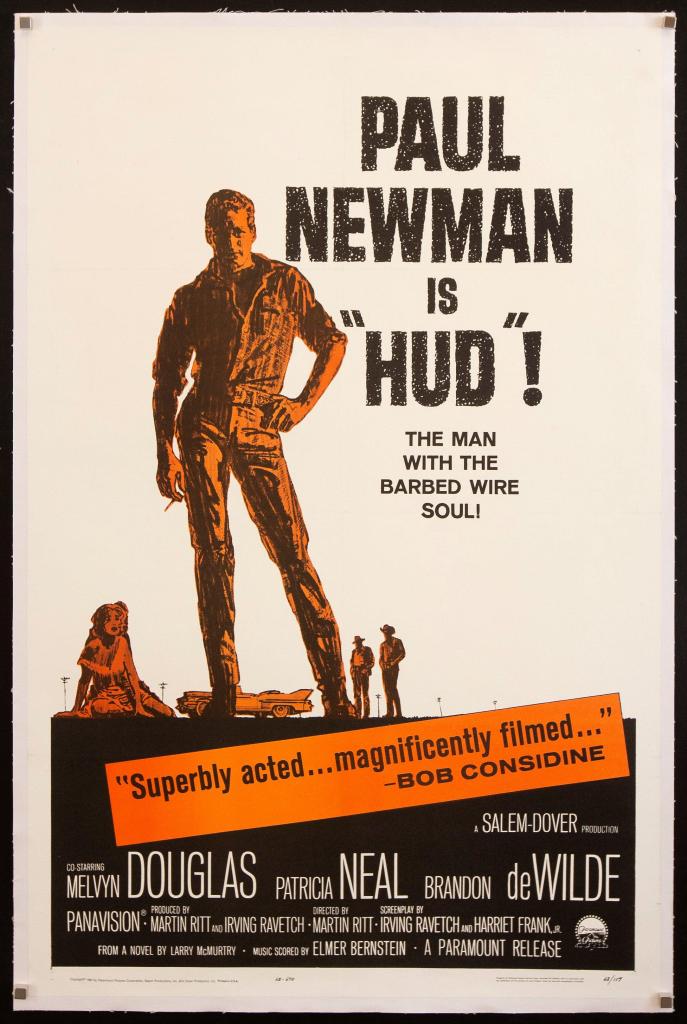
The man in question is the title character of the 1963 film, Hud, and he is a piece of work. He is played by Paul Newman, who gives a superstar performance full of swaggering malevolence. This was one of the defining roles of Newman’s early career, and it is easy to see why. He gets to do a little bit of everything here: lay on the charm, flash some sex appeal, flex his dramatic acting chops, and much more. In hindsight, he may have done too good a job. Not only was Newman’s performance iconic and influential for a couple of generations of moviegoers, but it also foreshadowed certain cultural changes in America’s national character much earlier than most people caught them.

But first, the plot: Hud belongs to a family of Texas cattle ranchers that is thrown into turmoil by an outbreak of foot-and-mouth disease on their ranch. From there, it turns into an old school family battle of wills – between selfish and immoral Hud, and his ethical and upstanding father, Homer – over how best to address the outbreak. Caught in the middle is Hud’s nephew, Lonnie, who admires both Hud and Homer, and will eventually have to pick sides. Watching from the sidelines is the family’s wise, no-nonsense housekeeper, Alma, who serves as de facto referee, diplomat, and Greek chorus. 

So, how much of a reprobate is Hud, really? Well, to start, he wants to sell the infected herd of cattle without disclosing that they are damaged goods. That way, he can make some money off of them instead of losing money by having to put them down. When Homer digs his heels in on that, Hud sues him. (Hud also calls his own father by his first name: who does that except a total louse?) He is also happy to sleep with anyone’s wife or start a bar brawl just for his own amusement. Most despicable of all, he eventually tries to have his way with Alma against her will, even though she may be the only person he actually likes. Liking people, however, has nothing to do with it because Hud is a man who acts completely on impulse. Whatever he wants, he tries to take it, and the consequences be damned. Let me put it this way: even Hud’s father does not like him, and says so right to his face in one of the film’s most memorable scenes. 

Some background: Newman developed Hud with director Martin Ritt as a starring vehicle for himself. It is adapted from Larry McMurtry’s debut novel, Horseman, Pass By (which I have not read) by veteran screenwriting team Irving Ravetch and Harriet Frank, Jr., and one big change they made in the transition from page to screen was a shift in protagonist. In the novel, Lonnie is the main character, whereas the title of the movie says it all. The switch is understandable for a couple of reasons. As presented in the film, Lonnie is mostly one-dimensional, a young innocent who is still becoming a fully-formed person. He is not as interesting as Hud, who is a full-blown SOB: hedonistic, unethical, unpredictable, and just the kind of flashy role that is typically catnip for an actor.

Newman and Ritt also chose to focus on Hud precisely because he is so vile. As film critic Shawn Levy explains in his excellent biography, Paul Newman: A Life, “…Hud’s unremitting cruelty was in part what recommended the material to Newman and Ritt: they wanted to make a movie that broke the mold of all the Hollywood films in which a leading man turned from heel to hero in the final reel…Ritt, Newman, and the Ravetches had intended an indictment of a certain strain in the American character…” So, Hud was intended to be a cautionary tale featuring the title character as an example of hubris run amok. Bookmark that little tidbit for now, and we will return to it in a minute.

The thematic slant of the film is brought to life perfectly by Ritt and veteran cinematographer James Wong Howe, who shoots in stark, unsentimental black and white. According to Levy, they chose that approach so “the film’s themes of corruption weren’t overcome by a romantic image of fading cowboy life.” Mission accomplished. The look of Hud enhances its emotional textures. The increasingly barren Texas landscape mirrors the surging desolation of Hud’s inner life. Standing in sharp contrast are the other characters, especially Homer, whose steadfast principles sometimes make him sound like too much of an old fogey, but Melvyn Douglas’ splendid performance humanizes him in three dimensions. Alma’s prosaic, world-weary earthiness is fleshed out perfectly by Patricia Neal’s superb performance. One gets the sense that she could be just as crude and vulgar as Hud (which may be one of the reasons he likes her), but she simply opted not to choose violence. Brandon deWilde’s performance as Lonnie is the perfect foil for Newman’s Hud, embodying the former’s innocence as an effective contrast to the latter’s impurity. 

Then, there is Newman, who is magnificent here. His performance is perhaps best described by Levy as “a cross between Richard III and Elvis Presley.” He has star quality galore, and achieves the thematic goals of the film to powerful effect – perhaps too much so. When Hud opened to positive reviews in the spring of 1963, it also did strong business at the box office. The surprising part of that, at least for Newman and Ritt, was how much audiences liked the movie because they liked Hud. As Ritt later commented, “I got a lot of letters after that picture from kids saying Hud was right…The old man’s a jerk, and the kid’s a schmuck…The kids were very cynical; they were committed to their own appetites, and that was it. That’s why the film did the kind of business it did – kids loved Hud. That son of a bitch that I hated, they loved.”

In hindsight, it seems obvious why that happened. The filmmakers miscalculated their approach to the script by making the villain the main character. And, they did not realize that having someone as appealing as Newman playing such an asshole would maybe look like an endorsement of Hud’s behavior. As my friend John DeVore put it so brilliantly last year in an essay he wrote for Fatherly, “Being an asshole feels good, like scratching poison ivy blisters. Assholes can do whatever they want, whenever they want. To be an asshole is to be unshackled from concepts like honor, fair play and duty are hopelessly corny, old-fashioned goody-goody bunk…assholes swagger. They swash and buckle. They’re the new rock stars who give off pure, 100% IDGAF vibes.”

Today, we are all too familiar with the concept of the anti-hero protagonist (which is just a nicer way of calling the main character an asshole), but I imagine it was a more shocking phenomenon back in the 1960s. And, little did anyone know back then that Hud, the character, would be a harbinger of things to come in today’s political arena, which seems to be overrun with scorched earth clowns who drank some of his Kool-Aid. Because of that, Hud inspired more than a couple of earnest think pieces about how the past decade had confirmed the film’s sociological prescience.

Like other works of art, Hud has shown us that it can be about more than one thing, and its competing interpretations – both the repudiation of Hud, and the endorsement of him – are both equally discernible today. And, it is such an expertly made film that it can withstand whatever the audience wants to project onto it or take away from it. But, its original intent is plain as day when Homer issues this warning to Lonnie: “Little by little the look of the country changes because of the men we admire…You’re just going to have to make up your own mind one day about what’s right and wrong.”
Pandemic Top 10

This blog has been in hibernation for most of the pandemic and now it’s time to finally rouse it from its virtual slumber. And, what better way to do so than by highlighting a few of the ways I passed the time during the pandemic. Like many other people, I read a lot of books, watched a lot of movies, listened to a lot of music, and did just about anything else I could to distract myself from the terrifying uncertainty created by the collision of a global health crisis and a rancorous election year. Let us never again repeat that particular convergence of events, shall we?

But, more than just numbing myself with all types of media and entertainment, I used the pandemic to get cozy once again with some old favorites, and find solace again in art and artists that I love. That was the best way for me to cope with a world that seemed increasingly close to turning into the Upside Down. For the most part it worked, and now I present the results of all the field research I did from home these past four years. 

Hud

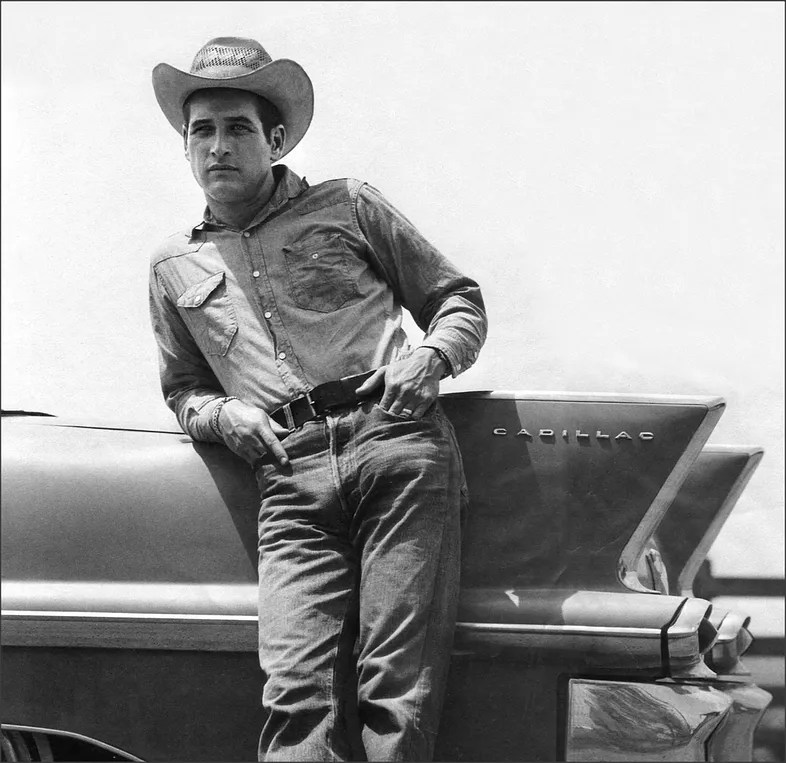
Paul Newman: one of my favorite actors, and his performance in this gets my vote as the best of his early career. But also, Hud became my movie obsession during the pandemic. There was a moment or two where I was convinced that it could explain everything about the social-political-cultural moment we, as a society, found ourselves in during the previous presidential administration. No doubt I went a little crazy over this, but what else was I going to do while sitting at home contemplating orange skies? Also, I don’t think I was completely off base. I have a lot to say about this movie, and I may yet say it all in a future post. For now, it’s worth mentioning that I’m not the only person who was struck by this movie in a similar fashion during the pandemic. Also worth saying: Hud is a master class in film direction (thank you, Martin Ritt) that is anchored by a trio of outstanding performances from Newman, Patricia Neal, and Melvyn Douglas. If you watch it only for those reasons, you will not be disappointed.

Reference Books

In the days before the internet, we had hard copy reference books, and I was a big fan of them. During the pandemic, I started rebuilding my collection with the help of the onl ine secondhand market (precisely what the internet was made for, in my opinion). My favorites were always movie and music reference books, and I cannot tell you how thrilling it was to find replacement copies of two favorite sources of Oscar history, Len Lyons’ guide to essential jazz albums (as of 1980), and John Kobal’s survey of the greatest movies ever made (as of 1988). Best of all was tracking down a new copy of Première magazine’s Guide to Movies on Video, featuring their terrific end-of-the-decade list of the best movies of the 1980s. I spent many hours poring over these again, and it was divine.

The Criterion Collection

The pandemic was also the perfect excuse to double down on my love of hard copy media, specifically Criterion Blu-rays. I admittedly went a little nuts here: Do the Right Thing; sex, lies, and videotape; A Room With a View; Time Bandits; Local Hero; Matewan; The Adventures of Baron Munchausen – I bought them all, and many others. Totally in line with this blog’s mission, though, so I called it research. Also, the content, design, and packaging of all the Criterion editions is gorgeous and peerless. I love them.

Hard Copy Media

Speaking of Blu-rays, why stop at just Criterion? If I was going to stay at home indefinitely with limited movements in the outside world, then I was also going to go all in on the revival of my home video library. Kino Lorber, Warner Archives, and Amazon (of course) all helped me out here, and, again, I went a little overboard: The Verdict, Prizzi’s Honor, Time After Time, Victory, and Fandango, just to name a few. (Special thanks to my mother-in-law for the new copy of From Here to Eternity, and to my wife for the new copy of Richard Pryor Live on the Sunset Strip, both of which were perfectly timed gifts during the pandemic.)

Books About Strictly Back Catalgoue (SBC) Topics

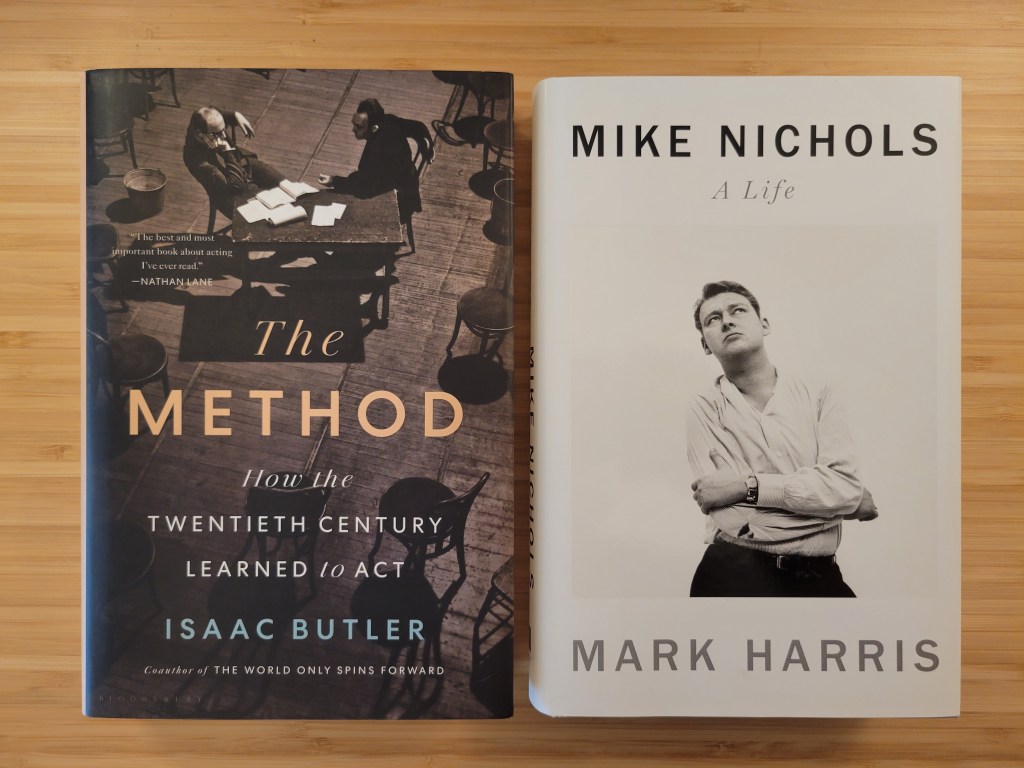
I didn’t just sit around watching movies, though. There was a lot of pandemic reading, much of it relevant to SBC. I jumped head first into such enthralling volumes as Isaac Butler’s history of Method acting, Mark Harris’ excellent biography of Mike Nichols, Joe Hagan’s wild biography of Jann Wenner and the history of Rolling Stone magazine, Robin D.G. Kelley’s comprehensive biography of Thelonious Monk, and Julie Salomon’s classic behind-the-scenes movie exposé, The Devil’s Candy. These were just some of the highlights of an extended shelter-in-place spent doing a deep dive on all things SBC.

Streaming Platforms

I know: you’re about to remind me that streaming is too new to be truly considered back catalogue. To which I refer you to Francis Ford Coppola’s recent comments about streaming at this year’s Cannes Film Festival. Which is all just my way of saying that there were a lot of classic TV shows running in my living room thanks to the magic of the 21st century’s dominant rental and exhibition format. My wife and I watched all of M*A*S*H*, Taxi, St. Elsewhere, The Golden Girls, Murder, She Wrote, and The Odd Couple, along with many others – and we enjoyed the hell out of every single one of them. The streamers easily justify their own existence by giving us the ability to watch most classic TV shows on demand like this.

De La Soul

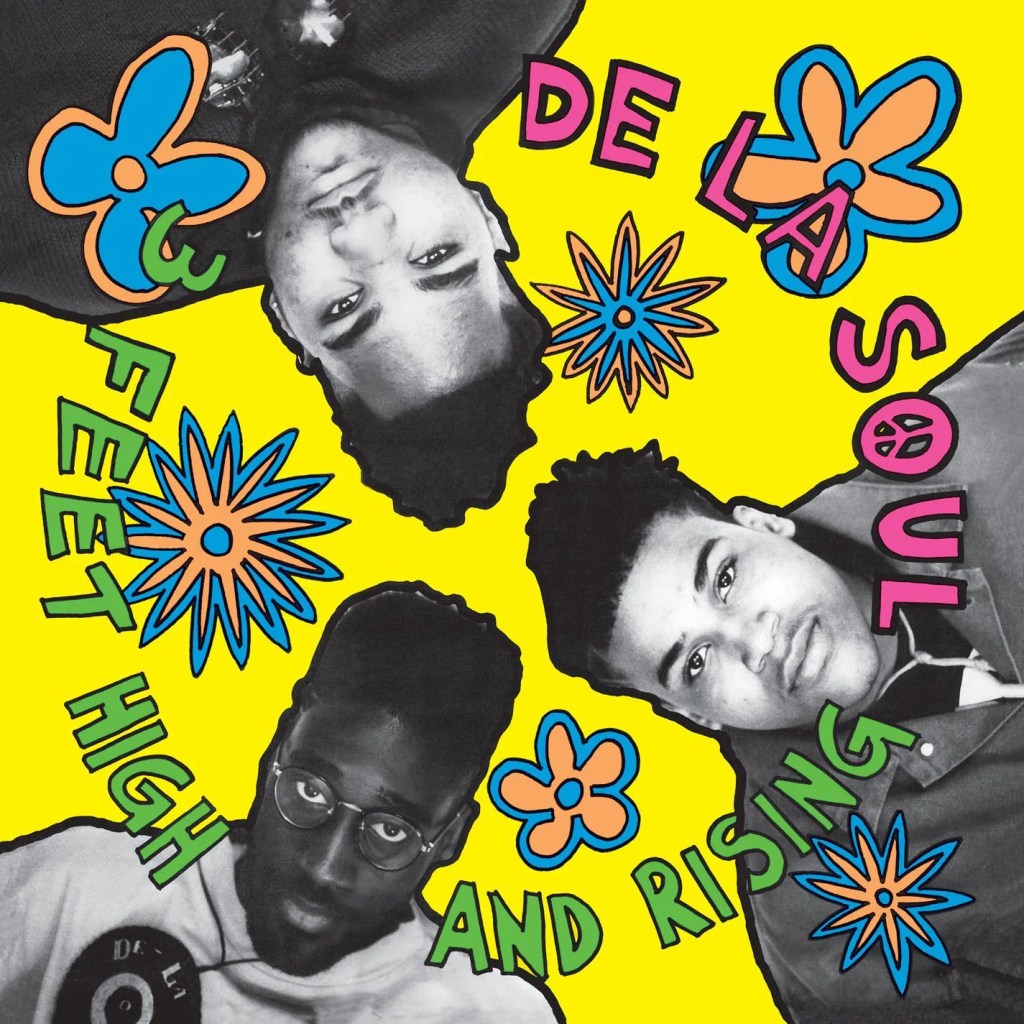
Speaking of streaming, the entire De La Soul catalogue finally hit the streaming platforms after a notoriously difficult and well-documented journey to get there. I’ve written about them before, back when it was uncertain that their discography would ever enter the modern digital world, and I’m glad that is now a moot point. We were well out of the dangerous part of the pandemic by the time this happened, but it was still a cause for celebration at my house the day these albums appeared on Spotify. 3 Feet High and Rising, De La Soul is Dead, and Buhloone Mindstate all went into heavy rotation for a couple of weeks, and they have remained staple listening over here ever since. Such a great gift to humanity as we all began to slowly emerge from our pandemic bunkers. 

Roger Ebert’s Collections of Bad Reviews

Did you know that, among Ebert’s prodigious bibliography, he published three volumes worth of reviews for movies he panned? And, boy, are they delicious. Nobody wrote a good takedown like he did. There is sarcasm galore here. Highlights include Ebert’s frequent invocation of the Gene Siskel test (“Is this movie more interesting than a documentary of the same actors having lunch?”), and his perfect takedown of Deuce Bigelow: European Gigolo. These volumes got my wife and I through many a trying evening during the pandemic (they are so good, I read them aloud to her). Funny, insightful, and mercifully free of pomposity and self-importance, Ebert reads like the friendly-but-opinionated regular at your local bar. He is a top shelf cinephile who speaks both for and to the people.

Live Concerts

By the middle of 2022, I was vaccinated enough (and feeling comfortable enough) to try my hand at attending live concerts again, and I was glad that I did. It was absolutely fantastic to see live music again, and I hope to never take that for granted again. During the first week of June that year, I saw both Tears for Fears (pictured above) and Midnight Oil within days of each other. The following year, my wife and I saw the San Francisco Symphony twice within three months: the first time on Valentine’s Day, featuring guest conductor John Williams (yes, that John Williams) and violin virtuoso Anne-Sophie Mutter; the second time featuring jazz legend Branford Marsalis. These shows were all fantastic, and great reminders for me that there is nothing else like seeing world class artists do their thing live in person. Being in the same room with that kind of talent and skill generates its own kind of special energy, and I have always found that inspiring. 

Live Theater

There was also a return to attending live theater, which happened early in 2022 when my wife decided to jump into our local theater scene and start auditioning for shows. Since then, she has done everything from Shakespeare to Noel Coward to Agatha Christie to Frank Loesser, and I have seen every single one (spoiler alert: she is a rockstar). In addition to my wife’s emergence as a Bay Area theater superstar, I’ve also been able to see things, like A.C.T.’s production of A Strange Loop, the Broadway production of Back to the Future (pictured above), and Eddie Izzard’s Off-Broadway turn as Hamlet. Again, it was wonderful to be back in a dark room with total strangers having a shared communal experience, watching talented people cast their magic in person while doing so to serve the larger purpose of entertaining and enlightening the audience to the point of catharsis. I cannot tell you how glad I am that I stayed alive long enough to do that again.

The Daily Earworm Shuffle: Part II

Last week, I took a journey through one of my longstanding Spotify playlists: Daily Earworm. It was fun, and much more upbeat than I expected, so I’m doing it again. Here are more highlights from the ongoing set list in my subconscious:

“Reminiscing,” Little River Band: This is one of the yacht rock classics that takes me back to my childhood summer vacations in the Florida panhandle. For me, this is the sound of driving to the beach with my family on a ridiculously sunny day, and, for that reason alone, I will always love yacht rock.

“9 to 5,” Dolly Parton: Over the course of our marriage so far, my wife and I have discovered a couple of things. First, we can watch this movie anytime. It is eternally delightful. Secondly, we both really love Dolly. We will listen to any song of hers, and watch any movie of hers (And, we have.)

“Flash Light,” Parliament: One of my wife’s absolute favorite songs. It ends up on the playlist for every party we throw. We played it at our wedding. I’m guessing it will get played at our respective funerals. Basically, a song for all occasions.

“Here Come Those Tears Again,” Jackson Browne: A rare upbeat-sounding track from Browne that belies its pensive, melancholy lyrics. I’ve always loved his voice and the way he writes, and this is one of my favorites of his.

“The Mandalorian,” Ludwig Goransson: My wife and I were immediately taken with this show when it premiered last year, and especially with its soundtrack. I’m a longtime fan of film and television music, so it didn’t take any doing for this to enter my heavy rotation for a week or two.

“I Believe (When I Fall in Love it Will be Forever),” Stevie Wonder: Speaking of TV shows, have you seen the new High Fidelity series with Zoe Kravitz? It is so well done, and I highly recommend it. This was another one I binged right away when it premiered, and I loved the way it used this song, both as connective tissue to its movie version and as a bit of a thematic inversion from the way it was used in the movie. Super clever and super cool.

“Stand Up,” Cynthia Erivo: Another catchy movie song, delivered with catchy conviction by Erivo. I couldn’t hear this one enough the day after I saw Harriet.

“Walking on a Thin Line,” Huey Lewis and the News: A rare moment of gravitas for this pack of Bay Area favorites. It’s not quite convincing, but it doesn’t really matter because everything else that’s great about them – catchy hooks, a tight rhythm section, and Huey’s smooth vocals – is on full display.

“If I Should Fall from Grace with God,” The Pogues: This raucous celebration of a song needs no explanation. But, if you do need one, just picture yourself and your mates listening to this while sharing a pitcher in your favorite pub. There you go.

“The Dicty Glide,” Don Byron: This album, Byron’s tribute to the work of the Raymond Scott Quintette, the John Kirby Sextet and Duke Ellington, became a favorite of mine when I worked at a record store during college. I played it in the store as often as I could, and it always made my shift go by faster (plus, I never failed to sell a copy or two).

“Walk it Down,” Talking Heads: A subtly catchy tune from a cleverly crafted Heads album. This band truly did not know how to do anything poorly.

“Jigsaw Puzzle,” The Rolling Stones: A forgotten track from a classic Stones album. This was back when they were transitioning from learning their trade in record time to becoming the self-professed Greatest Rock and Roll Band in the World. No wonder they could bill themselves as such with a throwaway this good.

“How Much Did You Get for Your Soul?,” The Pretenders: Slick, shiny, synth-tinged Pretenders still pack a punch. Chrissie Hynde’s patented snarl comes through no matter how studio musicians she surrounds herself with.

“I Say a Little Prayer,” Aretha Franklin: I’ve written about this one before. Suffice it to say, one of the greatest covers of all time.

“The Chamber of 32 Doors,” Genesis: One day, I’ll write something extensive about how much I love this band. For now, though, I continue to marvel at how much their inherent pop sensibilities shine through the prog rock conventions of the mid-1970s. Mind-blowing to this day.

Award Tour: Oscar Season Warm-Up, Part 2

Image result for star wars 1977 photos

Award Tour travels through the yesteryears of pop culture to revisit both the highlights and the curiosities of award season.

As the announcement of this year’s Academy Award nominations approaches (FYI: they’re coming up tomorrow morning), I continue my look back at past recipients of the four major film critics groups end-of-year awards. In my previous post, I highlighted a half dozen times the critics’ picks were spot-on. This time, I take a look at six instances where they opted to be truly idiosyncratic, in either an innovative, surprising, or (sometimes) baffling way. These former honorees prove that there is no ironclad way to predict what the critics will do come award season.

1969 – National Board of Review (NBR), Best Director: Alfred Hitchcock, Topaz

This was only the second time in his career that Hitchcock won an award for directing, and it was a puzzling choice for so many reasons. 1969 was a year chock full of notable films, but the NBR thought that Hitchcock prevailed with a film that is now largely forgotten. Really? They couldn’t have honored him sooner for any of the legendary movies he’d made before then? The late film director Francois Truffaut said it best in what may be the definitive book on Hitchcock: “It is obvious that despite a few scattered beautiful scenes…Topaz is not a good picture. The studio didn’t like it, and neither did the public, the critics, nor even the Hitcockians. The director himself wanted to forget it, and felt an imperative need to make up for it.”

1977 – Los Angeles Film Critics Association (LAFCA), Best Picture: Star Wars

Nowadays, it’s hard to imagine a world in which the Star Wars franchise doesn’t exist. But, back in 1977, the original installment of the Skywalker saga was a shock to the moviegoing public’s system, a movie so revolutionary that it changed both the parameters of filmmaking possibilites and the business practices of the movie industry. Let me put it this way: Star Wars was such a big deal when it came out that it shattered the show business bias against so-called “genre films,” and scored 10 Academy Award nominations, including Best Picture and Best Director. The LAFCA Best Picture win for Best Picture was one of the first steps in Star Wars‘ long march towards arguably becoming the all-time heavyweight champion of movie blockbusters.

1981 – National Society of Film Critics (NSFC), Best Supporting Actor: Robert Preston, S.O.B.

Best remembered as Professor Harold Hill in The Music Man (or Centauri in The Last Starfighter, depending upon which generation you hail from), Preston has some mischievous fun playing against type in S.O.B., Blake Edwards’ rowdy, savage takedown of the movie industry. Playing a private physician to the Hollywood elite with the kind of low-key, flexible morals that suit his clientele just fine, Preston gets to display some dry comic wit, and position himself as a comedic supporting actor par excellence. His performance didn’t get much more traction on the 1981 awards trail beyond his NSFC win, but it probably helped his longer-term case the following year when he nabbed his first (and only) Oscar nomination for his scene-stealing turn in Victor/Victoria.

1984 – New York Film Critics Circle (NYFCC), Best Actor: Steve Martin, All of Me

This was the performance that took Martin’s film career up a notch or two, and he knew it. In the biography Steve Martin: The Magic Years, the comedian admitted, “My mature film career started with All of Me…” 1984 was a heavyweight year for movies, featuring a crowded field of iconic, award-worthy performances – including Martin’s. As an everyday attorney who accidentally ends up having to share his body with the soul of an eccentric millionaire (played by the fantastic Lily Tomlin), Martin’s bravura performance is a master class in physical comedy, and it brought him a newfound level of professional respect: he also won the NSFC’s Best Actor Award, received a Golden Globe nomination for Best Actor, and proved once and all that there was more to him than just “King Tut” and The Jerk.

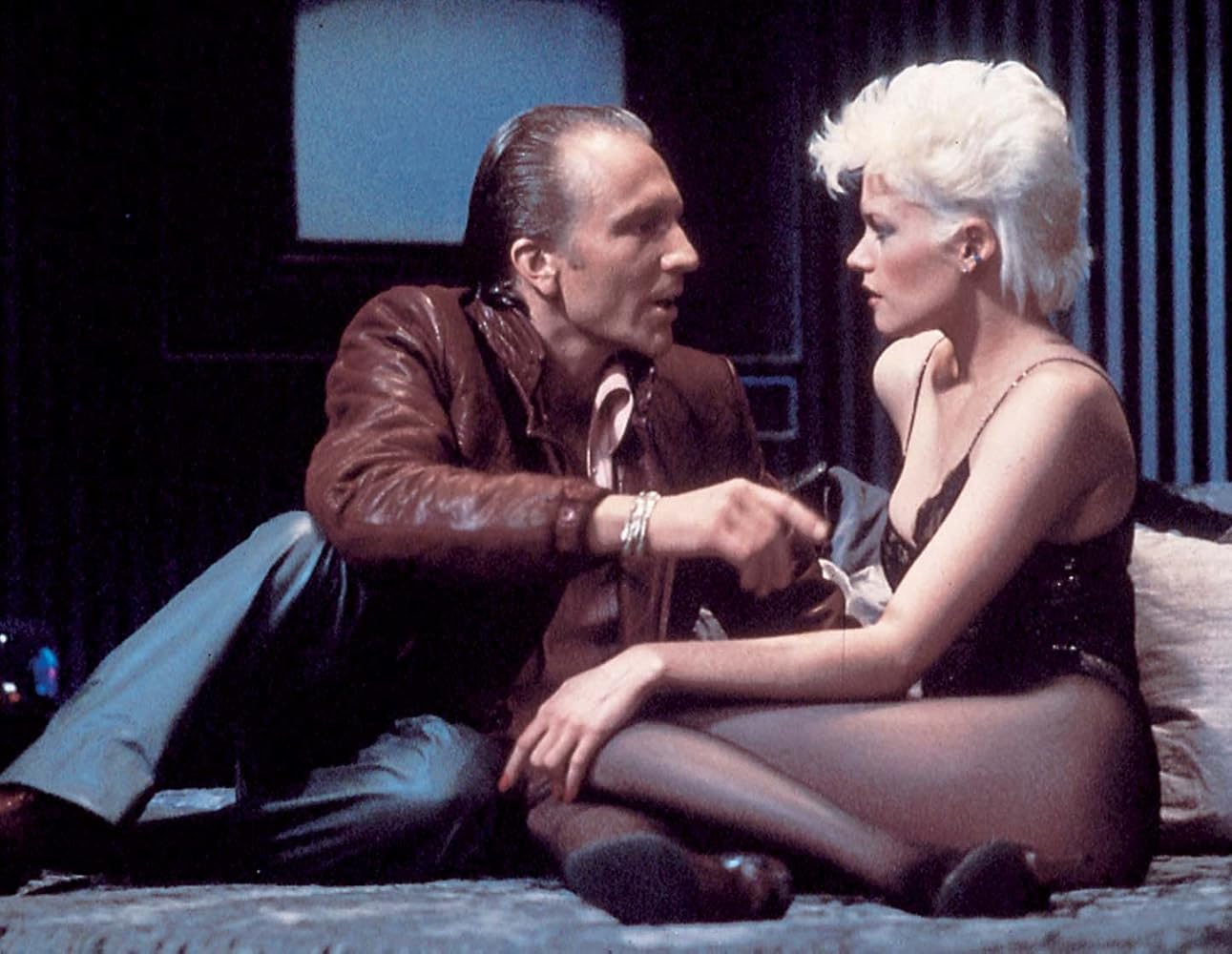
1984 – NSFC, Best Supporting Actress: Melanie Griffith, Body Double

Melanie Griffith and Craig Wasson in Body Double (1984)

In hindsight, this one seems a little random, especially considering that 1984 was such a powerhouse year for movie performances. Still, Griffith shines in her breakout role as a porn star caught up in an amateur sleuth’s cock-eyed murder investigation. As former New York Times film critic Vincent Canby said in his review of Body Double, “Miss Griffith gives a perfectly controlled comic performance that successfully neutralizes all questions relating to plausibility. She’s not exactly new to films… What is new is the self- assured screen presence she demonstrates here…” Griffith went on to score a Golden Globe nomination for Best Supporting Actress for her work here, and it wasn’t long before she was starring in the films that cemented her reputation: Something Wild and Working Girl.

1998 – NYFCC, Best Actress: Cameron Diaz, There’s Something About Mary

Historically speaking, film critics have been more willing to consider comedy as artistically legitimate than the movie industry guilds have. By that metric alone, this pick by the NYFCC should not have been all that surprising – and yet, it totally was. Diaz had not been in the awards conversation at all that year, despite starring in one of the highest-grossing films of 1998. Perhaps it was easy to overlook her performance because she basically played the comic straight man to her flashier co-stars, Ben Stiller and Matt Dillon. But, what Diaz brings to There’s Something About Mary is an old-fashioned dose of high-wattage movie star charisma. Janet Maslin of The New York Times wrote that Diaz plays the title character “with a blithe comic style that makes her as funny as she is dazzling.” Maslin was not alone in that opinion: Diaz scored a Golden Globe nomination for Best Actress later that year, and her career went next level after Mary.

Award Tour: Oscar Season Warm-Up, Part 1

Award Tour travels through the yesteryears of pop culture to revisit both the highlights and the curiosities of award season.

As we approach the end of the calendar year, we also move into the beginning of Oscar season, a concentrated burst of heavyweight P.R. campaigns and red carpet appearances that spans the Golden Globe Awards, the Screen Actors Guild Awards, and a host of other industry fetes, and culminates at the biggest Hollywood finish line of them all: the Academy Awards (which will be handed out on February 9, 2020).

The official start of Oscar season comes early this month when the National Board of Review announces the recipients of their annual awards on December 3rd. They represent the first of the four major critics groups – including the New York Film Critics Circle, the Los Angeles Film Critics Association, and the National Society of Film Critics – whose best-of-the-year accolades signal that the Oscar race is officially on.

By the time the Oscar nominations are announced each year, there are usually very few surprises left. But, the critics group awards are often full of surprises that influence the Oscar race, and can also boost the visibility of a deserving artist or film. Here are a half dozen moments where the scribes got things amazingly right.

1938 – New York Film Critics Circle (NYFCC), Best Director: Alfred Hitchcock, The Lady Vanishes

Film buffs take note: this was the first of only two awards that Hitchcock ever won for directing (and, we’ll be talking about the second one in a follow-up post). Throughout a long and storied career in which he arguably became the most popular, well-known, and frequently imitated director that the movie business has ever known, it seems shocking, in retrospect, that Hitchcock never won any of the industry’s highest honors (i.e. the Oscar, Emmy, Golden Globe, or Director’s Guild Award), and was largely ignored by most of the major film critics groups. So, without knowing it, the Gotham critics made history with this one. In a year that has since become better known for such traditional Hollywood fare as Boys Town, Jezebel, and You Can’t Take it With You (the eventual 1938 Oscar winner for both Best Picture and Best Director), the NYFCC’s decision to honor Hitchcock for his classic mystery thriller now looks especially forward-thinking.

1985 – Los Angeles Film Critics Association (LAFCA), Best Film: Brazil

This was another forward-thinking choice, and one that was especially daring at the time. Director Terry Gilliam was locked in a contentious battle with Universal Pictures over the release of his dystopian science fiction satire, Brazil (a battle that was well-chronicled in Jack Mathews’ behind-the-scenes page-turner, The Battle of Brazil). The now-legendary conflict between Gilliam and Universal chairman Sid Sheinberg included a studio-sanctioned team of editors working on a more audience-friendly version of the movie without Gilliam’s consent; a full-page ad in Variety in which Gilliam cheekily asked Sheinberg when he was going to release the film; and, a slate of secret screenings of Gilliam’s cut of the film that the director held for film critics behind the studio’s back. The shocking conclusion to this whole affair came when the LAFCA voted to give Brazil their award for Best Film, even though it still had not yet been officially released anywhere in the United States. With heavyweight hopefuls like The Color Purple and Out of Africa (the eventual Oscar winner for Best Picture that year) vying for award season position, this was the equivalent of lobbing a grenade at the Hollywood publicity machine. After that, Universal quickly relented: Gilliam and Sheinberg reached a détente that got Brazil into theaters for an end-of-the-year run, and a cult classic was born.

1987 – NYFCC, Best Supporting Actor: Morgan Freeman, Street Smart

Before he was known as both God and one of America’s favorite movie presidents, Morgan Freeman was perhaps most recognizable as one of the most popular characters from 1970s children’s television: Easy Reader from The Electric Company. After spending much of that decade on PBS helping a subset of Gen X-ers learn how to read, it was a total surprise to see Freeman playing an irascible and manipulative pimp in Street Smart. But, his performance allowed him to display more versatility than audiences knew he had, and it got the attention of the larger film community: he won nearly all of the film critics’ awards that year, and landed his first Oscar nomination. Best of all, Street Smart gave Freeman the breakthrough role that launched his movie career as we know it now.

1988 – NYFCC, Best Actor: Jeremy Irons, Dead Ringers

Why yes, a David Cronenberg movie about twin brother gyncologists who are both sleeping with the same partner is just as weird and unsettling as one would expect it to be. But, the movie in question, Dead Ringers, also gave Jeremy Irons a flashy role that made him an early Oscar frontrunner in 1988. It, therefore, wasn’t surprising when he started racking up award season accolades from the critics group. The big surprise came later when he was shut out of that year’s Best Actor Oscar race altogether (the eventual winner was equally flashy in his own right: Dustin Hoffman in Rain Man). Two years later, when Irons finally did win an Oscar (for his equally colorful turn as Claus von Bulow in Reversal of Fortune), he gave Cronenberg a long overdue thanks in his acceptance speech.

1991 – National Board of Review (NBR), Best Actress: Geena Davis and Susan Sarandon, Thelma & Louise

When it comes to movie awards, ties don’t happen very often, but the NBR’s 1991 tie for Best Actress could not have been more appropriate. How else to honor two equally iconic performances in an epochal film? How could anyone sepearate Thelma from Louise? Impossible. This was the only suitable response. Unfortunately, the Oscars skipped a golden opportunity to follow suit at that year’s ceremony: Davis and Sarandon were passed over in favor of Jodie Foster’s equally classic turn in The Silence of the Lambs.

2007 – National Society of Film Critics (NSFC), Best Supporting Actress: Cate Blanchett, I’m Not There

In a career full of dazzling performances, this one may be Cate Blanchett’s most stunning. There’s no other way to describe how thoroughly she morphs into one of Todd Haynes‘ multiple Bob Dylan dopplegangers in the musical docudrama I’m Not There. (Compare the clip above with this footage of Dylan from 1965, then take note of how fast Blanchett’s performance blows your mind.) Critics had high praise for Haynes’ surreal impressionistic biopic, but audiences were more lukewarm towards it, which may have dampened Blanchett’s Oscar chances that year. (Tilda Swinton took home the Best Supporting Actress trophy that year for her turn in Michael Clayton).

For Your Consideration: Honorary Oscar 2020

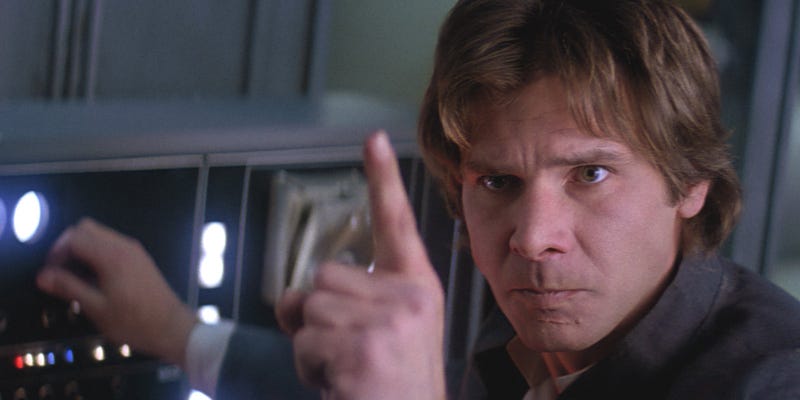
Image result for harrison ford han solo empire strikes back

Earlier this month, the Academy of Motion Picture Arts and Sciences announced their roster of honorees for this year’s Governors Awards – a.k.a. the Academy’s trio of lifetime achievement trophies: the Honorary Oscar, the Jean Hersholt Humanitarian Award, or the Irving G. Thalberg Memorial Award – and they’ve chosen another group of deserving recipients. Over the course of the past decade, the Academy’s Board of Governors has been especially sharp in their selections for these awards, which are given for “extraordinary distinction in lifetime achievement, exceptional contributions to the state of motion picture arts and sciences, or for outstanding service to the Academy.” Some of my favorite honorees from recent years include Lauren Bacall, Gordon Willis, Eli Wallach, James Earl Jones, Hal Needham, Angela Lansbury, Steve Martin, Hayao Miyazaki, Spike Lee, Gena Rowlands, Jackie Chan, Lynn Stalmaster, and Donald Sutherland. It’s as if the Academy has finally started paying closer attention to those creatives who have carved out a truly distinctive career for themselves, as well as those whom audiences actually care about.

The history of the Academy Awards is littered with deserving artists who never won a competitive Oscar. The Academy has done its best over the years to correct such oversights by handing out their Honorary Awards. That’s how countless past masters finally got their due: I’m thinking of Alfred Hitchcock, Sidney Lumet, Cary Grant, Judy Garland, and Peter O’Toole, off the top of my head, but the list goes on and on.

But, there have also been the non-winners who never even even got an Honorary Oscar (i.e. Richard Burton), and the legends who were kept out of the mix for both an Honorary Oscar and a competitive one (i.e. Marilyn Monroe). One could literally write a book about the Academy’s blind spots on both fronts.

With that said, I humbly submit the following candidates for Honorary Oscar consideration in 2020. All five have established themselves firmly in the field over the years, and have built up substantial goodwill with filmgoing audiences around the world.

Kevin Bacon

Image result for kevin bacon tremors
Kevin Bacon in Tremors (1990)

Bacon has reinvented himself countless times, shown remarkable career longevity, and he never phones it in. And, what does he have to show for it? Nary a single Oscar nomination. Dear Academy: are you kidding me? Did you see Murder in the First? Let me put it this way: even my wife – who thinks the Oscars are self-congratulatory show biz nonsense, and truly could not care less about them – even she was outraged when I told her Bacon had never been nominated. That’s how ridiculous his career-long omission is. Plus, he’s been around so long, and is so popular with audiences, there’s a game named after him. Who else can say that?

Annette Bening

Image result for annette bening american beauty
Annette Bening in American Beauty (1999)

Always a bridesmaid at the Oscars, but never the bride – yet. It never quite seems to be Bening’s year. She’s been nominated four times over the past two decades, and been thwarted by her Oscar kryptonite, Hilary Swank, on two of those occasions. She’s built an impressive resume that has established her as one of the strongest actors of the modern era, and she’s well-connected: Bening previously served as one of the Actors Branch representatives on the Academy’s Board of Governors, so they quite literally know her. How stupid will they feel twenty years from now when they realize it took them so long to give her the Honorary Oscar?

Glenn Close

Image result for glenn close dangerous liaisons
Glenn Close in Dangerous Liaisons (1988)

Talk about someone who has reinvented themselves countless times, shown remarkable career longevity, and, like Kevin Bacon, also never phones it in. In an alternate universe, Close would be as critically lauded as Meryl Streep, and she’d have the hardware to show for it. The buzz around Close when she first hit in the early 1980s made it seem like such an outcome was inevitable. Nearly 40 years and seven Oscar nominations later, however, she remains winless. That makes her the current record-holder among living actors for most nods without a win. (Was I the only person who thought she would finally win for The Wife?) It seems inconceivable that someone as respected, versatile, and ballsy as Close would still be empty-handed, but here we are. Dear Academy, I ask you: what else does she have to do?

Harrison Ford

Image result for harrison ford raiders of the lost ark
Harrison Ford in Raiders of the Lost Ark (1981)

Come on, now. He is both Han Solo and Indiana Jones, for Christ’s sake. He has made a bundle of money for the studios. And, he’s only been nominated for an Oscar once, for his splendid performance in Witness. The $64,000 question is: how was he not nominated for playing two of the most iconic characters in film history?! In hindsight, those omissions seem absurd, especially considering how often he’s imitated (after all, he did help create the template for the modern action movie hero). Best of all: he doesn’t actually give a damn – about accolades, or much else to do with show biz. Still, Ford is that rare movie star who remains both influential and bankable after five decades in the industry. He is long overdue for some recognition.

Samuel L. Jackson

Image result for samuel l. jackson pulp fiction
Samuel L. Jackson in Pulp Fiction (1994)

Like Harrison Ford, Jackson has only been nominated once, for his legendary, career-defining performance in Pulp Fiction. Also, like Ford, this is such a no-brainer, I feel as if it doesn’t have to be explained or justified, so I’ll just say this: he’s been both a Jedi and Senor Love Daddy, he has battled snakes on a plane, he assembled the most popular team of superheroes on Earth, and he’s also Mr. Glass. He is extraordinarily popular with audiences and knows which projects to hitch his wagon to: as of this writing, the total box office gross of his collective filmography make Jackson the highest-grossing film actor of all time. In other words, he can – and will – do anything. Show the man some respect.

Stanley Donen: Full of Joy

When Stanley Donen died late last month, the world lost one of the last remaining film directors of Hollywood’s Golden Age. He was almost never mentioned in the same sentence with his peers from that hallowed era – Hitchcock, Hawks, Huston, Welles, Chaplin, Wilder, Kazan, to name a few – probably because he specialized in a genre that has seldom been taken seriously: the big-budget movie musical. I dare say, however, that he was, in his own way, just as talented, accomplished, and influential as his more revered colleagues. After all, he did co-direct one of the universally acknowledged greatest films of all time, a rare distinction for a musical.

One look at Donen’s filmography reveals his strengths and interests, best summarized by Tad Friend of The New Yorker in a 2003 profile of the director: “He made the world of champagne fountains and pillbox hats look enchanting, which is much harder than it sounds.” The signature stars of Donen’s most well-known films – Gene Kelly, Fred Astaire, Cary Grant, and Audrey Hepburn – exemplify that ethos of charming, witty refinement perfectly.

But, a closer look at Donen’s films also reveals another overarching theme: joy, of all stripes, as evidenced by some of my favorite moments from his films:

“You’re All the World to Me,” Royal Wedding (1951)

The musical number that personifies the phrase “movie magic.” It’s got everything, starting with Fred Astaire’s Tom Bowen being so in love that he momentarily turns into Spider-Man. Donen and Astaire do such an incredible job on this number that the audience never thinks twice about it being completely stylistically different from the rest of the movie. Instead, it is simply proof positive that once the singing and dancing start, anything can happen in a musical. It’s genre that is built for this kind of whimsy, and Donen clearly loves that.

“Good Morning,” Singin’ in the Rain (1952)

Here is Donen the craftsman showing off in his own subtle way: with terrific framing and composition, great camera movement, and a minimum of cuts. Donen uses maximum shot lengths in order to let the performers fully do their thing, and the choreography complements both them and the plot. Every move that Kelly, Debbie Reynolds and Donald O’Connor make here is appropriate for this particular point in the story. This is the joy of watching three top-notch triple threats in peak form.

“Make ‘Em Laugh,” Singin’ in the Rain

A musical number that perfectly introduces and defines a character. We know exactly who Donald O’Connor’s Cosmo is after this, and we carry that knowledge with us for the rest of the movie: anytime he shows up, we know he could potentially be this funny, nimble, and charming at any moment. It’s no coincidence that this number is both inventive and hilarious and also tailored to O’Connor’s strengths. This is another moment from the Donen filmography where we revel in the joy of watching a expert performer operating at the highest level.

“Sunday Jumps,” Royal Wedding

My mom’s first question after I told her I’d recently watched this movie again: “Is that the one where he dances with the hat rack?” Please note that she did not ask “Is that the one where he dances on the ceiling?” That’s how good this number is. Donen and Fred Astaire take a potentially lame idea – dancing solo with a room full of inanimate objects – and activate it the fullest. This is a prime example of Donen’s and Astaire’s inventiveness, and another great illustration of character development through dance: Astaire’s Tom Bowen is both resourceful and a workaholic.

Jo Stockton’s Bohemian Dance, Funny Face (1957)

There are so many reasons why Funny Face is one of Donen’s best musicals, and most of them can be found in this number. Yet again, we have a dance that is tailored to a performer’s strengths, and also defines character. Audrey Hepburn’s Jo Stockton is thrilled to be out in Paris meeting the bohemian intelligentsia, and this dance is how she expresses that. It’s a great showcase for both Hepburn’s latent dance skills and her goofy sense of humor. Plus, the mise-en-scene is off the charts.

I would be remiss if I didn’t mention another highlight from Funny Face: two of the greatest shots of Audrey Hepburn ever put on film. Donen clearly loved working with A-list movie stars, and often did everything he could to make sure they looked their glamorous best. I would bet that no one ever looked as fabulous in any of his movies as Hepburn does here. Case in point: skip forward to the 3:29 point in this number and the 5:53 point in this sequence, and you will see Hepburn being even more photogenic and iconic than usual. (She must have liked working with Donen, as well: they went on to make two more movies together.)