Retro Review: Hud

Imagine a man with no boundaries or morals. He lies, cheats, fights, and argues, all in his own self-interest. He acts impulsively, and buzzsaws his way through anyone or anything that stands in his way. He blames everyone else for his problems, and takes no responsibility for his own actions. His allegiance is only to himself. Sound familiar?

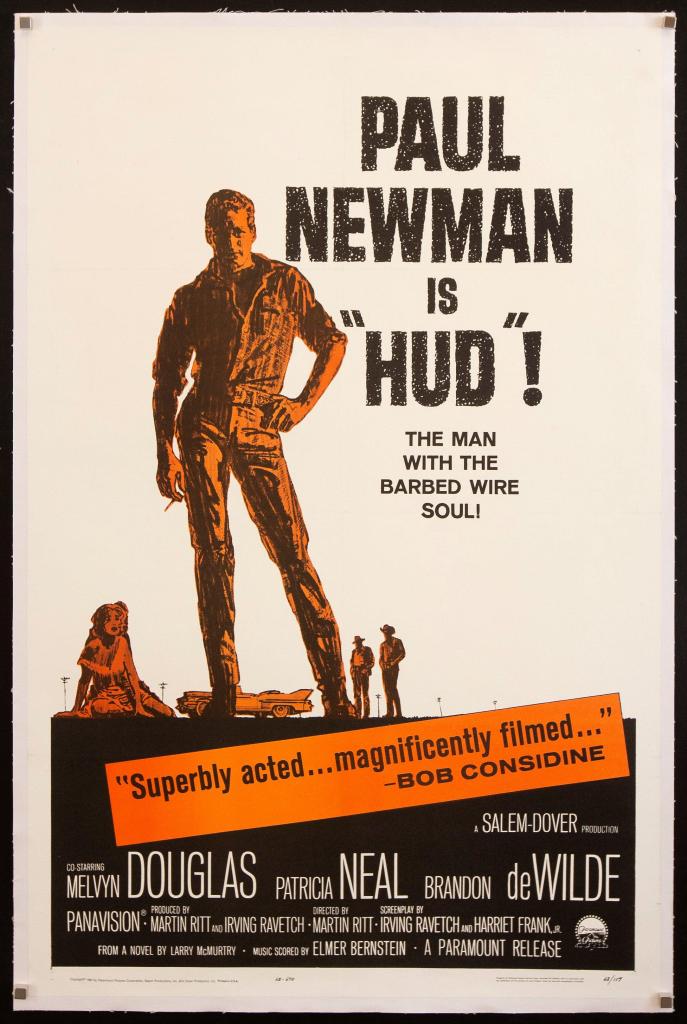
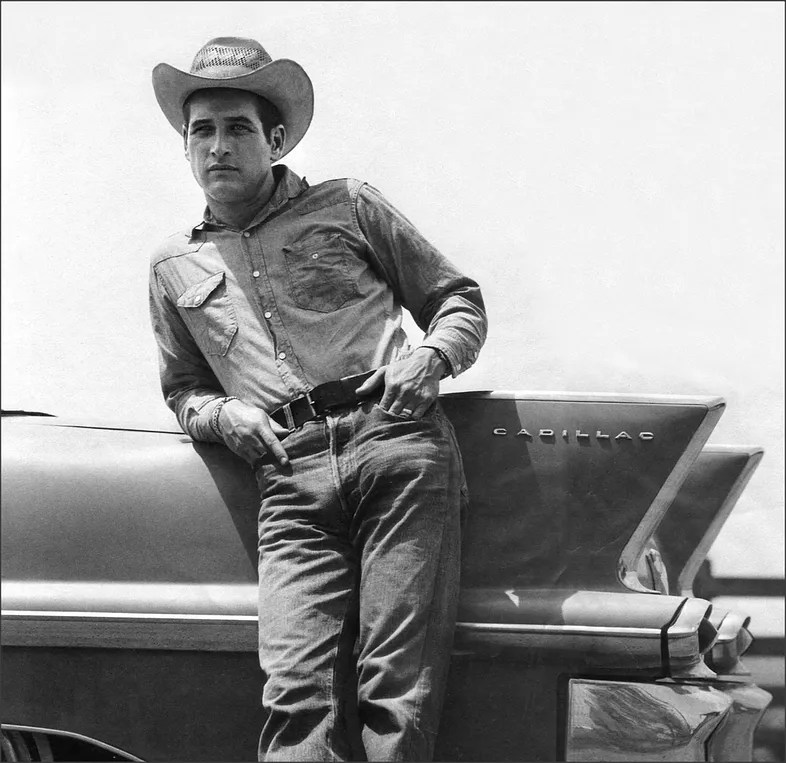
The man in question is the title character of the 1963 film, Hud, and he is a piece of work. He is played by Paul Newman, who gives a superstar performance full of swaggering malevolence. This was one of the defining roles of Newman’s early career, and it is easy to see why. He gets to do a little bit of everything here: lay on the charm, flash some sex appeal, flex his dramatic acting chops, and much more. In hindsight, he may have done too good a job. Not only was Newman’s performance iconic and influential for a couple of generations of moviegoers, but it also foreshadowed certain cultural changes in America’s national character much earlier than most people caught them.

But first, the plot: Hud belongs to a family of Texas cattle ranchers that is thrown into turmoil by an outbreak of foot-and-mouth disease on their ranch. From there, it turns into an old school family battle of wills – between selfish and immoral Hud, and his ethical and upstanding father, Homer – over how best to address the outbreak. Caught in the middle is Hud’s nephew, Lonnie, who admires both Hud and Homer, and will eventually have to pick sides. Watching from the sidelines is the family’s wise, no-nonsense housekeeper, Alma, who serves as de facto referee, diplomat, and Greek chorus. 

So, how much of a reprobate is Hud, really? Well, to start, he wants to sell the infected herd of cattle without disclosing that they are damaged goods. That way, he can make some money off of them instead of losing money by having to put them down. When Homer digs his heels in on that, Hud sues him. (Hud also calls his own father by his first name: who does that except a total louse?) He is also happy to sleep with anyone’s wife or start a bar brawl just for his own amusement. Most despicable of all, he eventually tries to have his way with Alma against her will, even though she may be the only person he actually likes. Liking people, however, has nothing to do with it because Hud is a man who acts completely on impulse. Whatever he wants, he tries to take it, and the consequences be damned. Let me put it this way: even Hud’s father does not like him, and says so right to his face in one of the film’s most memorable scenes. 

Some background: Newman developed Hud with director Martin Ritt as a starring vehicle for himself. It is adapted from Larry McMurtry’s debut novel, Horseman, Pass By (which I have not read) by veteran screenwriting team Irving Ravetch and Harriet Frank, Jr., and one big change they made in the transition from page to screen was a shift in protagonist. In the novel, Lonnie is the main character, whereas the title of the movie says it all. The switch is understandable for a couple of reasons. As presented in the film, Lonnie is mostly one-dimensional, a young innocent who is still becoming a fully-formed person. He is not as interesting as Hud, who is a full-blown SOB: hedonistic, unethical, unpredictable, and just the kind of flashy role that is typically catnip for an actor.

Newman and Ritt also chose to focus on Hud precisely because he is so vile. As film critic Shawn Levy explains in his excellent biography, Paul Newman: A Life, “…Hud’s unremitting cruelty was in part what recommended the material to Newman and Ritt: they wanted to make a movie that broke the mold of all the Hollywood films in which a leading man turned from heel to hero in the final reel…Ritt, Newman, and the Ravetches had intended an indictment of a certain strain in the American character…” So, Hud was intended to be a cautionary tale featuring the title character as an example of hubris run amok. Bookmark that little tidbit for now, and we will return to it in a minute.

The thematic slant of the film is brought to life perfectly by Ritt and veteran cinematographer James Wong Howe, who shoots in stark, unsentimental black and white. According to Levy, they chose that approach so “the film’s themes of corruption weren’t overcome by a romantic image of fading cowboy life.” Mission accomplished. The look of Hud enhances its emotional textures. The increasingly barren Texas landscape mirrors the surging desolation of Hud’s inner life. Standing in sharp contrast are the other characters, especially Homer, whose steadfast principles sometimes make him sound like too much of an old fogey, but Melvyn Douglas’ splendid performance humanizes him in three dimensions. Alma’s prosaic, world-weary earthiness is fleshed out perfectly by Patricia Neal’s superb performance. One gets the sense that she could be just as crude and vulgar as Hud (which may be one of the reasons he likes her), but she simply opted not to choose violence. Brandon deWilde’s performance as Lonnie is the perfect foil for Newman’s Hud, embodying the former’s innocence as an effective contrast to the latter’s impurity. 

Then, there is Newman, who is magnificent here. His performance is perhaps best described by Levy as “a cross between Richard III and Elvis Presley.” He has star quality galore, and achieves the thematic goals of the film to powerful effect – perhaps too much so. When Hud opened to positive reviews in the spring of 1963, it also did strong business at the box office. The surprising part of that, at least for Newman and Ritt, was how much audiences liked the movie because they liked Hud. As Ritt later commented, “I got a lot of letters after that picture from kids saying Hud was right…The old man’s a jerk, and the kid’s a schmuck…The kids were very cynical; they were committed to their own appetites, and that was it. That’s why the film did the kind of business it did – kids loved Hud. That son of a bitch that I hated, they loved.”

In hindsight, it seems obvious why that happened. The filmmakers miscalculated their approach to the script by making the villain the main character. And, they did not realize that having someone as appealing as Newman playing such an asshole would maybe look like an endorsement of Hud’s behavior. As my friend John DeVore put it so brilliantly last year in an essay he wrote for Fatherly, “Being an asshole feels good, like scratching poison ivy blisters. Assholes can do whatever they want, whenever they want. To be an asshole is to be unshackled from concepts like honor, fair play and duty are hopelessly corny, old-fashioned goody-goody bunk…assholes swagger. They swash and buckle. They’re the new rock stars who give off pure, 100% IDGAF vibes.”

Today, we are all too familiar with the concept of the anti-hero protagonist (which is just a nicer way of calling the main character an asshole), but I imagine it was a more shocking phenomenon back in the 1960s. And, little did anyone know back then that Hud, the character, would be a harbinger of things to come in today’s political arena, which seems to be overrun with scorched earth clowns who drank some of his Kool-Aid. Because of that, Hud inspired more than a couple of earnest think pieces about how the past decade had confirmed the film’s sociological prescience.

Like other works of art, Hud has shown us that it can be about more than one thing, and its competing interpretations – both the repudiation of Hud, and the endorsement of him – are both equally discernible today. And, it is such an expertly made film that it can withstand whatever the audience wants to project onto it or take away from it. But, its original intent is plain as day when Homer issues this warning to Lonnie: “Little by little the look of the country changes because of the men we admire…You’re just going to have to make up your own mind one day about what’s right and wrong.”
Pandemic Top 10

This blog has been in hibernation for most of the pandemic and now it’s time to finally rouse it from its virtual slumber. And, what better way to do so than by highlighting a few of the ways I passed the time during the pandemic. Like many other people, I read a lot of books, watched a lot of movies, listened to a lot of music, and did just about anything else I could to distract myself from the terrifying uncertainty created by the collision of a global health crisis and a rancorous election year. Let us never again repeat that particular convergence of events, shall we?

But, more than just numbing myself with all types of media and entertainment, I used the pandemic to get cozy once again with some old favorites, and find solace again in art and artists that I love. That was the best way for me to cope with a world that seemed increasingly close to turning into the Upside Down. For the most part it worked, and now I present the results of all the field research I did from home these past four years. 

Hud

Paul Newman: one of my favorite actors, and his performance in this gets my vote as the best of his early career. But also, Hud became my movie obsession during the pandemic. There was a moment or two where I was convinced that it could explain everything about the social-political-cultural moment we, as a society, found ourselves in during the previous presidential administration. No doubt I went a little crazy over this, but what else was I going to do while sitting at home contemplating orange skies? Also, I don’t think I was completely off base. I have a lot to say about this movie, and I may yet say it all in a future post. For now, it’s worth mentioning that I’m not the only person who was struck by this movie in a similar fashion during the pandemic. Also worth saying: Hud is a master class in film direction (thank you, Martin Ritt) that is anchored by a trio of outstanding performances from Newman, Patricia Neal, and Melvyn Douglas. If you watch it only for those reasons, you will not be disappointed.

Reference Books

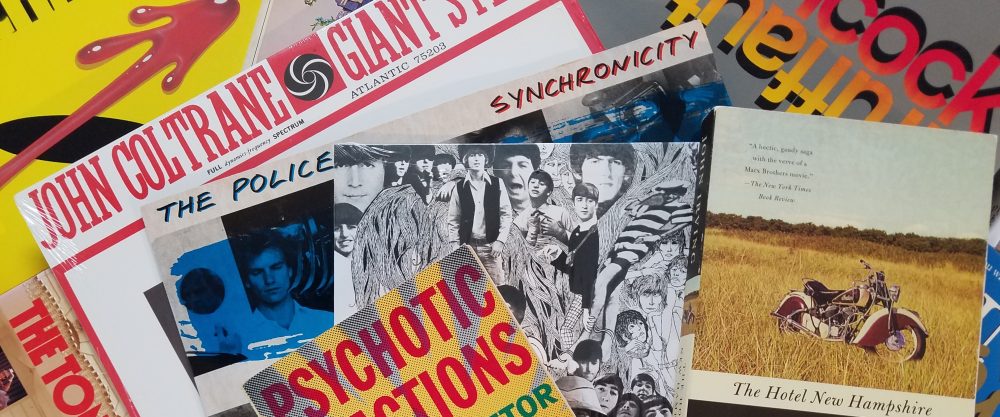
In the days before the internet, we had hard copy reference books, and I was a big fan of them. During the pandemic, I started rebuilding my collection with the help of the onl ine secondhand market (precisely what the internet was made for, in my opinion). My favorites were always movie and music reference books, and I cannot tell you how thrilling it was to find replacement copies of two favorite sources of Oscar history, Len Lyons’ guide to essential jazz albums (as of 1980), and John Kobal’s survey of the greatest movies ever made (as of 1988). Best of all was tracking down a new copy of Première magazine’s Guide to Movies on Video, featuring their terrific end-of-the-decade list of the best movies of the 1980s. I spent many hours poring over these again, and it was divine.

The Criterion Collection

The pandemic was also the perfect excuse to double down on my love of hard copy media, specifically Criterion Blu-rays. I admittedly went a little nuts here: Do the Right Thing; sex, lies, and videotape; A Room With a View; Time Bandits; Local Hero; Matewan; The Adventures of Baron Munchausen – I bought them all, and many others. Totally in line with this blog’s mission, though, so I called it research. Also, the content, design, and packaging of all the Criterion editions is gorgeous and peerless. I love them.

Hard Copy Media

Speaking of Blu-rays, why stop at just Criterion? If I was going to stay at home indefinitely with limited movements in the outside world, then I was also going to go all in on the revival of my home video library. Kino Lorber, Warner Archives, and Amazon (of course) all helped me out here, and, again, I went a little overboard: The Verdict, Prizzi’s Honor, Time After Time, Victory, and Fandango, just to name a few. (Special thanks to my mother-in-law for the new copy of From Here to Eternity, and to my wife for the new copy of Richard Pryor Live on the Sunset Strip, both of which were perfectly timed gifts during the pandemic.)

Books About Strictly Back Catalgoue (SBC) Topics

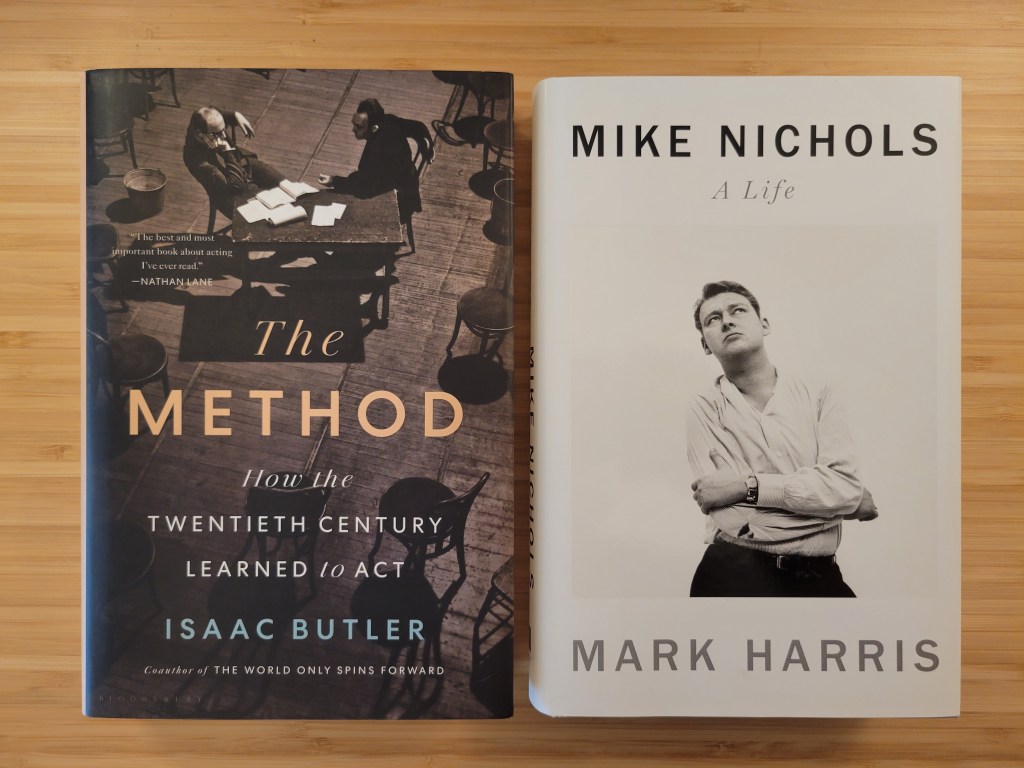
I didn’t just sit around watching movies, though. There was a lot of pandemic reading, much of it relevant to SBC. I jumped head first into such enthralling volumes as Isaac Butler’s history of Method acting, Mark Harris’ excellent biography of Mike Nichols, Joe Hagan’s wild biography of Jann Wenner and the history of Rolling Stone magazine, Robin D.G. Kelley’s comprehensive biography of Thelonious Monk, and Julie Salomon’s classic behind-the-scenes movie exposé, The Devil’s Candy. These were just some of the highlights of an extended shelter-in-place spent doing a deep dive on all things SBC.

Streaming Platforms

I know: you’re about to remind me that streaming is too new to be truly considered back catalogue. To which I refer you to Francis Ford Coppola’s recent comments about streaming at this year’s Cannes Film Festival. Which is all just my way of saying that there were a lot of classic TV shows running in my living room thanks to the magic of the 21st century’s dominant rental and exhibition format. My wife and I watched all of M*A*S*H*, Taxi, St. Elsewhere, The Golden Girls, Murder, She Wrote, and The Odd Couple, along with many others – and we enjoyed the hell out of every single one of them. The streamers easily justify their own existence by giving us the ability to watch most classic TV shows on demand like this.

De La Soul

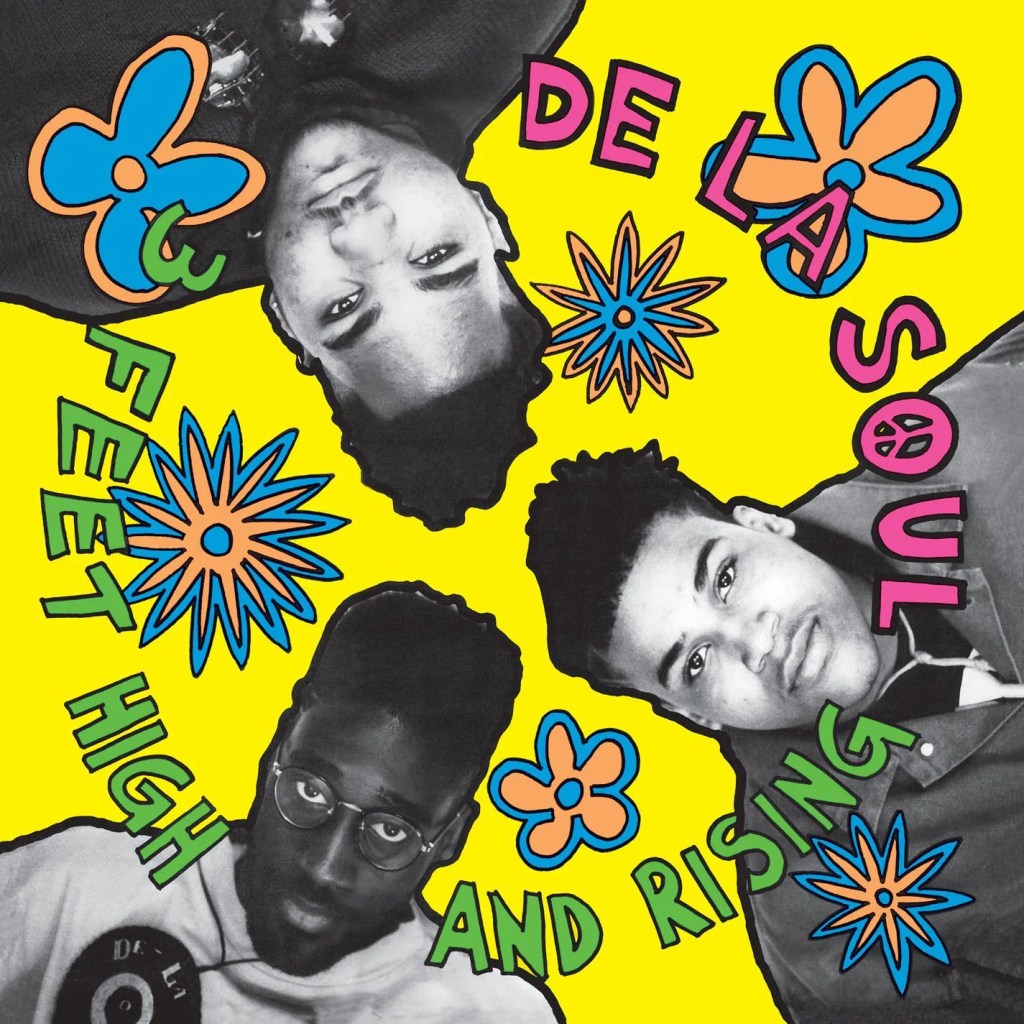
Speaking of streaming, the entire De La Soul catalogue finally hit the streaming platforms after a notoriously difficult and well-documented journey to get there. I’ve written about them before, back when it was uncertain that their discography would ever enter the modern digital world, and I’m glad that is now a moot point. We were well out of the dangerous part of the pandemic by the time this happened, but it was still a cause for celebration at my house the day these albums appeared on Spotify. 3 Feet High and Rising, De La Soul is Dead, and Buhloone Mindstate all went into heavy rotation for a couple of weeks, and they have remained staple listening over here ever since. Such a great gift to humanity as we all began to slowly emerge from our pandemic bunkers. 

Roger Ebert’s Collections of Bad Reviews

Did you know that, among Ebert’s prodigious bibliography, he published three volumes worth of reviews for movies he panned? And, boy, are they delicious. Nobody wrote a good takedown like he did. There is sarcasm galore here. Highlights include Ebert’s frequent invocation of the Gene Siskel test (“Is this movie more interesting than a documentary of the same actors having lunch?”), and his perfect takedown of Deuce Bigelow: European Gigolo. These volumes got my wife and I through many a trying evening during the pandemic (they are so good, I read them aloud to her). Funny, insightful, and mercifully free of pomposity and self-importance, Ebert reads like the friendly-but-opinionated regular at your local bar. He is a top shelf cinephile who speaks both for and to the people.

Live Concerts

By the middle of 2022, I was vaccinated enough (and feeling comfortable enough) to try my hand at attending live concerts again, and I was glad that I did. It was absolutely fantastic to see live music again, and I hope to never take that for granted again. During the first week of June that year, I saw both Tears for Fears (pictured above) and Midnight Oil within days of each other. The following year, my wife and I saw the San Francisco Symphony twice within three months: the first time on Valentine’s Day, featuring guest conductor John Williams (yes, that John Williams) and violin virtuoso Anne-Sophie Mutter; the second time featuring jazz legend Branford Marsalis. These shows were all fantastic, and great reminders for me that there is nothing else like seeing world class artists do their thing live in person. Being in the same room with that kind of talent and skill generates its own kind of special energy, and I have always found that inspiring. 

Live Theater

There was also a return to attending live theater, which happened early in 2022 when my wife decided to jump into our local theater scene and start auditioning for shows. Since then, she has done everything from Shakespeare to Noel Coward to Agatha Christie to Frank Loesser, and I have seen every single one (spoiler alert: she is a rockstar). In addition to my wife’s emergence as a Bay Area theater superstar, I’ve also been able to see things, like A.C.T.’s production of A Strange Loop, the Broadway production of Back to the Future (pictured above), and Eddie Izzard’s Off-Broadway turn as Hamlet. Again, it was wonderful to be back in a dark room with total strangers having a shared communal experience, watching talented people cast their magic in person while doing so to serve the larger purpose of entertaining and enlightening the audience to the point of catharsis. I cannot tell you how glad I am that I stayed alive long enough to do that again.